News Update

Federal Government Delays Rule for Mandatory Back-Up Camera in New Vehicles

(General Motors)
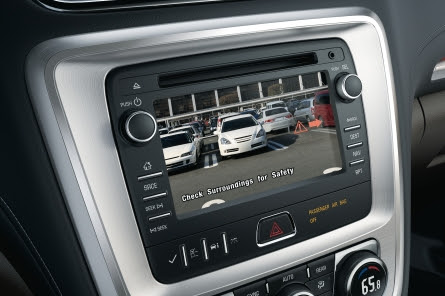
A possible requirement for automakers to put standard back-up cameras in all their new vehicles has been delayed again. This time, the deadline for the federal government to determine the requirements will be pushed back to 2015. According to Bloomberg, U.S. Transportation Secretary Ray LaHood sent a letter to Congress last Thursday informing members of this decision. Congress originally passed a law back in 2007 for the National Highway Traffic Safety Administration (NHTSA) to come up with requirements on how to increase rear visibility in vehicles. However, the final requirements have been delayed several times.
In the letter to Congress, Bloomberg says LaHood mentions that the cost for every life saved by having the back-up cameras could be as high as $18 million, and adds that they need to investigate the cost further before making a final decision on the requirement.
[Related: Lawmakers, Advocates Push to Make Back Up Cameras Standard]
In the meantime, The Detroit News says, “the National Highway Traffic Safety Administration plans to encourage automakers to add the cameras by proposing to disclose which cars have the cameras in the government’s New Car Assessment Program.” The distinction will be made by adding a “Recommended Advanced Technology Feature” label on those vehicles on a government website. While NHTSA says making rearview cameras mandatory is not cost-effective, the agency found that back over crashes result in up to 7,419 injuries per year. While most of the incidents are minor, there are still about 183 fatalities a year.
Although the deadline to finalize the rule has been pushed back until 2015, automakers likely won’t be required to install back-up cameras in all their new models for at least another 18 months after that. As of now, it looks like the rule, if finalized, won’t take effect until the 2017 model year.

Lawmakers, Advocates Push to Make Back Up Cameras Standard

If some lawmakers and safety advocates have their way, your next new car may have a standard rearview camera.
The Detroit News reports that Peter King, a Republican representative from New York and Jan Schakowsky, a Democratic representative from Illinois, are pushing the National Highway Traffic Safety Administration to finalize regulations to make backup cameras standard on new cars.

photo courtesy of Honda
In 2007, congress passed a law requiring that NHTSA set rear visibility requirements by Feb. 28, 2011, but the requirements have been repeatedly delayed by Transportation Secretary Ray LaHood. The Detroit News reports that adding cameras as standard equipment will cost the auto industry between $1.9 billion and $2.7 billion each year, according to data from 2010. Adding the cameras would raise the price of a new car between $159 to $203 if the car doesn't have a display screen, and $58 to $88 if the car does.
Safety advocates argue that the costs don't matter when lives are at stake. Kids and Cars, a safety advocacy group, says that between 1991 and 2011, 1,051 children under the age of 16 were killed in back over incidents. NHTSA estimates that 183 people are killed and 6,700 to 7,419 are injured each year in back over accidents.
Karen Pauly, an Iowa woman who backed over and killed her 19 month old son, now lobbies for standard rearview cameras in cars. She told the Des Moines, Iowa NBC affiliate that she asks lawmakers to "picture their son, daughter, grandchild or whoever in their life when they listen to me talk about the things that I saw that day when I saw him lying there.”
Cars.com says that some automakers, in response to consumer demand for rearview cameras, already have them as standard equipment on many of their models. They cite Honda, Hyundai and Kia as examples of carmakers with standard rearview cameras across most of their model lines. The Alliance of Automobile Manufacturers says that 70 percent of new cars have rearview cameras as available equipment.
If the regulations hadn't been delayed, 10 percent of new cars would have had rearview cameras by September 2012, 40 percent by a year later, and 100 percent by September 2014. Now it looks like the regulations will take effect by the 2015 model year at the earliest.
In our own Best Cars for Families awards, the availability of a rearview camera is a key component in determining the winners in each class. If you're searching for a family car, a rearview camera should be on the top of your list of features to look for.