News Update

Chrysler Recalls More Than 50,000 Jeep and Ram Models


Chrysler Group is recalling 45,961 Ram 1500 trucks in the U.S. due to a software issue that can disable the Electronic Stability Control (ESC). The recall affects 2013 model-year trucks with four-wheel drive. ESC systems use sensors to detect when a vehicle is losing control, and then helps the driver maintain control by applying the brakes to certain wheels to keep the car moving along its intended path. According to the National Highway Traffic Safety Administration (NHTSA), “A disabled ESC system may result in loss of directional control, increasing the risk of a crash.”
Affected owners should hear from Chrysler in August and dealers will update the ESC software for free. If you have any questions about the recall, you can call Chrysler at 1-800-247-9753 and mention recall campaign number N37.
2014 Jeep Grand Cherokee
2014 Jeep Grand Cherokees with LED headlamps have been recalled. (Chrysler Group)
Chrysler is also recalling 4,458 Jeep Grand Cherokee models for a problem with the vehicle’s parking lamps. NHTSA says that the recall affects 2014 Grand Cherokee Limited, Overland and Summit models that are equipped with premium headlamps and LED daytime running lights. When the driver turns the parking lights on, a software glitch immediately turns them off again. This can result in reduced visibility, which increases the risk of a crash. Without parking lamps, the vehicle also fails to conform to federal safety standards, according to NHTSA.
The fix involves a software update, which dealers will do free of charge. Chrysler will start contacting owners of affected vehicles in August. If you have any questions for Chrysler, you can contact them at 1-800-247-9753 and mention recall campaign number N42.

Federal Government Delays Rule for Mandatory Back-Up Camera in New Vehicles

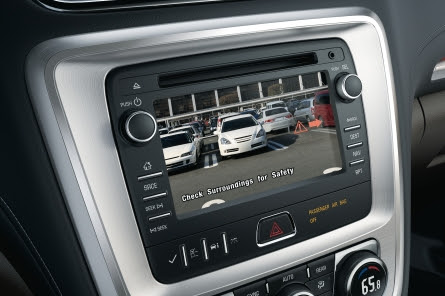
(General Motors)
A possible requirement for automakers to put standard back-up cameras in all their new vehicles has been delayed again. This time, the deadline for the federal government to determine the requirements will be pushed back to 2015. According to Bloomberg, U.S. Transportation Secretary Ray LaHood sent a letter to Congress last Thursday informing members of this decision. Congress originally passed a law back in 2007 for the National Highway Traffic Safety Administration (NHTSA) to come up with requirements on how to increase rear visibility in vehicles. However, the final requirements have been delayed several times.
In the letter to Congress, Bloomberg says LaHood mentions that the cost for every life saved by having the back-up cameras could be as high as $18 million, and adds that they need to investigate the cost further before making a final decision on the requirement.
[Related: Lawmakers, Advocates Push to Make Back Up Cameras Standard]
In the meantime, The Detroit News says, “the National Highway Traffic Safety Administration plans to encourage automakers to add the cameras by proposing to disclose which cars have the cameras in the government’s New Car Assessment Program.” The distinction will be made by adding a “Recommended Advanced Technology Feature” label on those vehicles on a government website. While NHTSA says making rearview cameras mandatory is not cost-effective, the agency found that back over crashes result in up to 7,419 injuries per year. While most of the incidents are minor, there are still about 183 fatalities a year.
Although the deadline to finalize the rule has been pushed back until 2015, automakers likely won’t be required to install back-up cameras in all their new models for at least another 18 months after that. As of now, it looks like the rule, if finalized, won’t take effect until the 2017 model year.

NHTSA Releases New Guidelines to Combat Distracted Driving


Photo courtesy of Getty Images.
The National Highway Traffic Safety Administration released voluntary guidelines Tuesday to help automakers minimize the risk of distracted driving. The new guidelines are designed to reduce distractions created by technology that’s built into vehicles, such as navigation and infotainment systems.
“Distracted driving is a deadly epidemic that has devastating consequences on our nation's roadways," says U.S. Transportation Secretary Ray LaHood in a press release. "These guidelines recognize that today's drivers appreciate technology, while providing automakers with a way to balance the innovation consumers want with the safety we all need."
NHTSA suggests that in-car tech features should only require a driver to take his or her eyes off the road for two seconds at a time, and a maximum of 12 seconds per task. Additionally, certain vehicle functions should be disabled unless the car is stopped and in park, which include:
  • Manual text entry for the purposes of text messaging and Internet browsing
  • Video-based entertainment and communications like video phoning or video conferencing
  • Display of certain types of text, including text messages, web pages and  social media content
NHTSA came up with its new guidelines after it conducted a study, which “showed that visual-manual tasks associated with hand-held phones and other portable devices increased the risk of getting into a crash by three times.” The greatest distractions include sending text messages, browsing and dialing phone numbers. Sending a text message takes a driver’s eyes off the road for an average of 23.3 seconds, which doubles the danger of a crash or near-crash. The study also suggests that activities like dialing a phone number, searching a phone’s contact list and reaching for a cell phone triples the risk of a collision.
Many automakers already lock drivers out of some settings when a vehicle is in motion. USA Today reports that Honda navigation systems have not allowed drivers to enter addresses if the vehicle is in motion since 2012. However, that’s not the case with every automaker. “BMW encourages voice activation and doesn't allow video displays while a car is moving, but does allow manual inputs.” USA Today reports that Tesla also allows drivers to make adjustments by hand, but that software updates have made “more use of controls on steering wheels, which are considered less distracting than buttons on navigation screens.”